A four-year degree isn’t the only way to build a real career — and for a lot of people, it’s not even the best way. Vocational training gets you skilled, certified, and earning in a fraction of the time, without the debt that follows most college graduates for a decade or more.
If you’re exploring vocational school options, medical assistant training deserves a serious look. It’s one of the fastest-growing healthcare careers in the country, the training is short, and the demand for qualified MAs isn’t slowing down. Here’s what you need to know.
What is a vocational school, exactly?
A vocational school — sometimes called a trade school or career school — is a training institution that prepares you for a specific profession. Unlike a four-year university, vocational programs focus exclusively on the skills you need for a particular job. No electives, no general education filler, no semesters spent on courses that have nothing to do with your career.
Vocational programs typically:
- Run weeks to months, not years — you’re trained and job-ready in a fraction of the time
- Cost significantly less than a degree — often $2,000–$6,000 versus $20,000–$100,000+
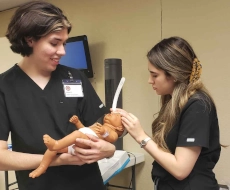
- Focus on hands-on skills — you practice what you’ll actually do on the job
- Lead directly to employment — graduates are trained to start working immediately, not to start another program
For people who want to get into the workforce quickly, vocational schools are the most efficient route available.
Why medical assistant training stands out
When you’re comparing vocational programs — welding, HVAC, CDL, cosmetology, phlebotomy, dental assisting, medical assisting — a few things make medical assisting especially attractive:
Growing demand
The Bureau of Labor Statistics projects medical assistant jobs to grow 13% through 2035, much faster than average. Clinics, physician offices, urgent care centers, and specialty practices all need trained MAs.
Strong starting salary
According to the BLS (May 2025 wage data), the national median salary for medical assistants is $45,690 per year ($21.97 per hour), and the highest-paid 10% earn more than $59,310.
Career flexibility
Medical assistants work in family medicine, pediatrics, cardiology, dermatology, orthopedics, urgent care, and more. You choose the setting that fits your interests.
No degree required
You don’t need a bachelor’s degree or even an associate’s degree. A focused medical assistant training program is enough to get hired and start your career.
Room to grow
Medical assisting isn’t a dead end. You can advance into lead or supervisory roles, specialize in phlebotomy or EKG technology, move into office management, or use the experience as a stepping stone toward nursing or other advanced healthcare careers.
What you’ll learn in a medical assistant program
A quality medical assistant training program covers both clinical and administrative skills:
Clinical:
- Taking and recording vital signs — blood pressure, heart rate, temperature, O2 saturation
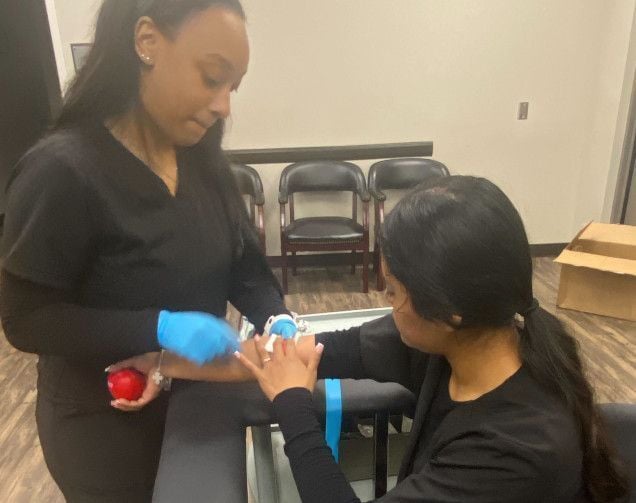
- Phlebotomy — drawing blood, labeling specimens, following safety protocols
- Injections — intramuscular, subcutaneous, and intradermal technique
- EKG/ECG — placing leads and running 12-lead electrocardiograms
- Infection control — sterilization, PPE, OSHA standards
- Assisting during patient exams and procedures
Administrative:
- Patient scheduling and check-in
- Electronic health records (EHR) navigation
- Insurance verification and billing basics
- HIPAA compliance
- Professional communication with patients and providers
This combination of skills is what makes medical assistants so valuable — you’re trained for both sides of the office.
How medical assistant training compares to other vocational paths
| |
Medical Assistant |
CNA |
Phlebotomy |
Cosmetology |
| Training time |
Weeks to months |
4–12 weeks |
4–8 weeks |
9–12 months |
| Median salary |
~$44,000 |
~$35,000 |
~$39,000 |
~$33,000 |
| Scope of work |
Clinical + admin |
Patient care |
Blood draws only |
Beauty services |
| Growth potential |
High |
Moderate |
Limited |
Moderate |
| Healthcare demand |
Very high |
High |
Moderate |
N/A |
Medical assisting offers one of the strongest combinations of career flexibility and job security among vocational careers.
How to find the right vocational school near you
When evaluating any vocational school, ask:
- Does the program include real, supervised clinical practice?
- Is medical assistant certification prep built into the curriculum?
- What is the total cost, and are payment plans available?
- How long is the program from start to finish?
- Does the school offer career placement support after graduation?
- Do graduates feel prepared for their first day on the job?
The answers to these questions will tell you whether a program is designed to help you succeed — or just collect your tuition.
Start your healthcare career at Medical Assistant School
If you’re ready to start a healthcare career, here’s your next step.